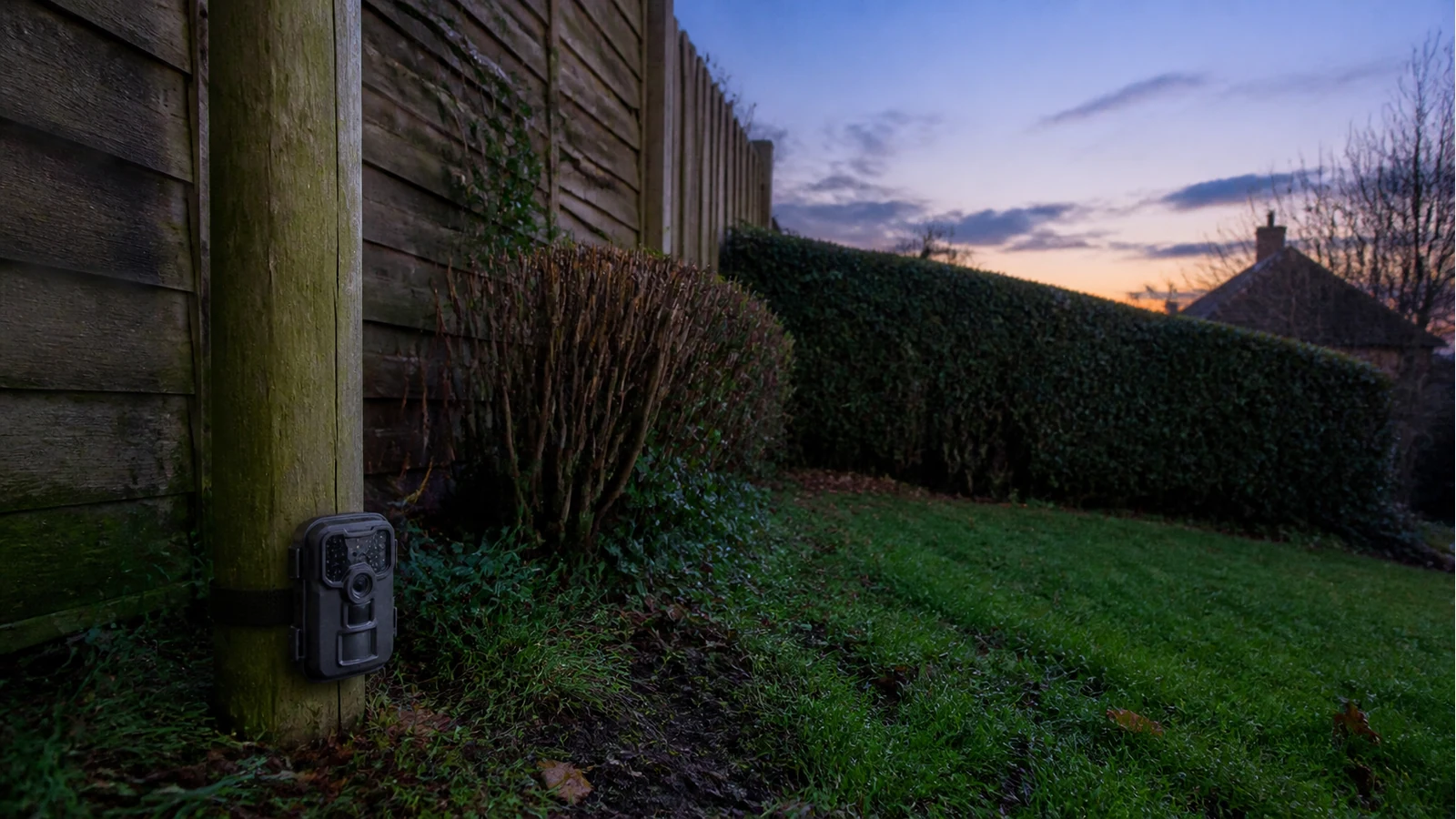
Hedgehog Trail Camera Placement Uk
For UK garden hedgehogs, start with the camera roughly 20-30 cm above the ground, aimed along a fence gap, hedge line or feeding route rather than down from a tree. Hedgehogs are short, so a camera that looks tidy at waist height can simply watch over them and record empty clips.
Pick the path before the camera position
Begin where the animal is already likely to travel: a small gap under a fence, the edge of a hedge, a compost corner or the route between cover and a feeding station. Hedgehog Street says low placement, looking straight along the expected route, gives much more reliable results than pointing down from high branches; its wildlife camera guidance gives the practical 20-30 cm starting point.
NatureSpy gives a similar garden range in its hedgehog monitoring guide, suggesting a low mount around 20-40 cm and a clear line towards likely travel points. Treat those figures as a starting setup, then adjust after your first review.
A simple first-night checklist
- Mount low: set the lens near hedgehog height, not human eye height.
- Aim along the route: face across a path or along a fence line so the hedgehog stays in frame longer.
- Keep the target close: for small mammals, a short distance usually beats a wide scenic view.
- Clear the foreground: remove loose grass directly in front of the sensor, without stripping habitat.
- Walk-test the frame: crouch, pass through the expected route and check whether the lower frame catches movement.
- Review after one night: if you get cats but no low visitors, tilt down slightly or move nearer to the run.
Where food or pause points fit
If you use hedgehog-safe food as a pause point, place it far enough from the camera to avoid a blurred close-up but close enough for the sensor to trigger. NatureSpy's public guidance suggests roughly 1-3 metres for clearer footage. Do not handle, move or trap hedgehogs for a better shot; the camera should observe normal behaviour.
When one camera is not enough
A single camera can only answer one question at a time. If you hear movement but still miss the visitor, split the garden into three possible routes: the entry gap, the food or water pause point, and a sheltered corner. Multiple cameras are useful when you are solving a route puzzle, not when you simply need a closer angle.
Negative fit
Do not expect a trail camera to fix hedgehog welfare problems. If an animal looks injured, trapped or out in worrying daytime behaviour, stop treating it as a camera-placement problem and seek appropriate wildlife rescue advice.
When a multipack makes sense
If you have already mapped more than one useful sightline, such as a gate gap, bed edge and outbuilding corner, a four-camera set can be a practical next step. Compare the current SunteMini option on the SunteMini trail camera 4 pack page only if you need several fixed viewpoints rather than one premium camera.