Low Glow Vs No Glow Trail Camera Uk
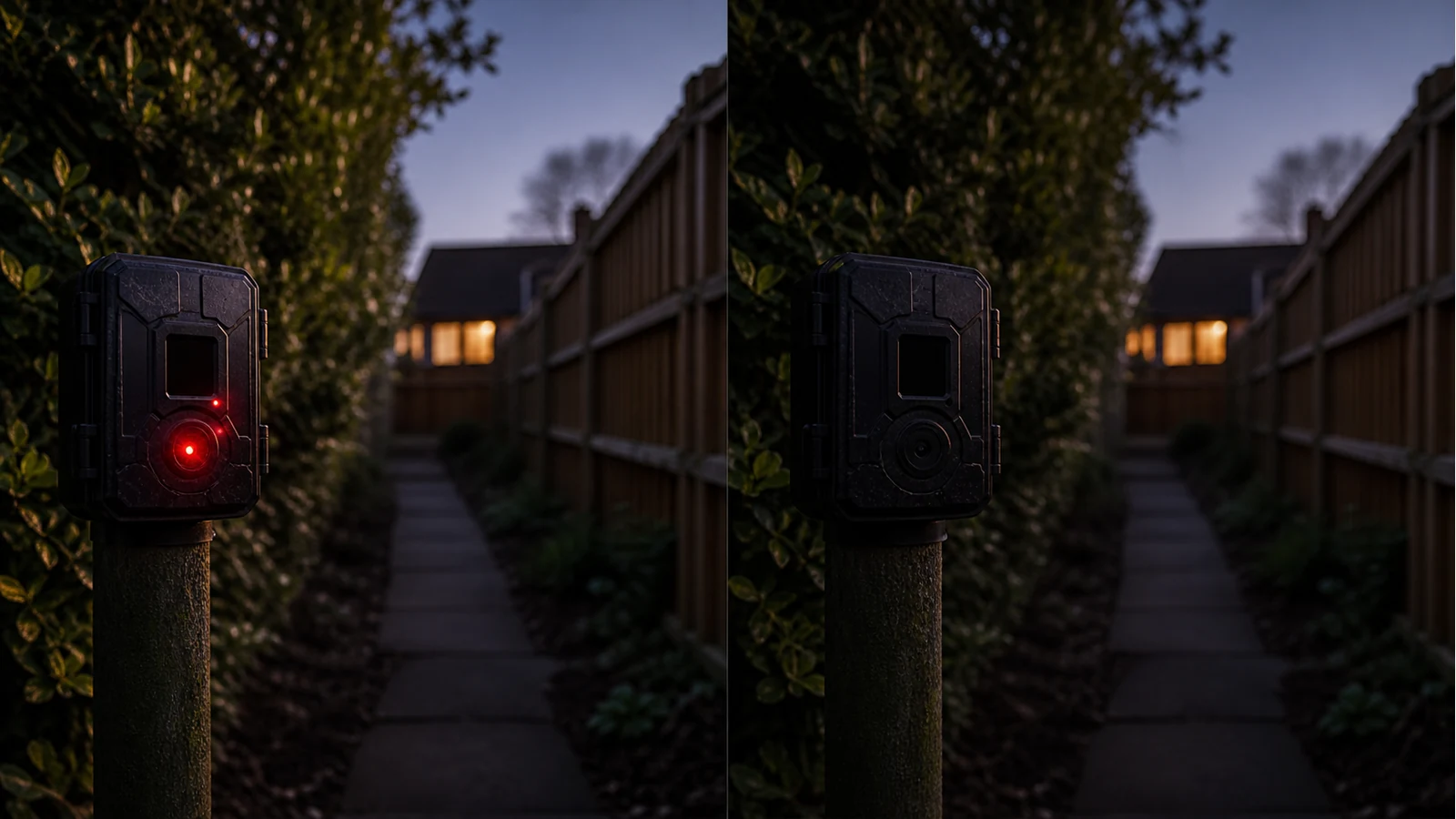
Low-glow trail cameras usually give brighter night images, while no-glow cameras are harder for people and some animals to notice. Choose low-glow for most garden wildlife footage; choose no-glow when camera visibility, theft risk or a public-edge boundary is the bigger problem.
The basic difference
NatureSpy's LED comparison guide explains the common split: low-glow infrared is typically around 850 nm and may show a faint red glow; no-glow is typically around 940 nm and is less visible. Pakatak's night vision explainer describes the same trade-off in buyer terms: low-glow tends to favour brighter night output, while no-glow favours stealth.
Decision table
| Use case | Usually better fit | Why |
|---|---|---|
| Back garden hedgehogs and foxes | Low-glow | Image brightness often matters more than hiding the LED. |
| Boundary near a shared path | No-glow | Less visible camera presence may reduce attention and disturbance. |
| Theft-prone rural gate | No-glow | A visible red glow can reveal the camera position. |
| Learning animal routes | Low-glow | Clearer night frames may be more useful than maximum discretion. |
Do not over-index on megapixels
For night footage, placement and LED choice can matter more than a headline resolution number. A high-resolution camera aimed too high, too far away or into moving grass can still produce useless clips. Decide the night-vision priority first: brighter footage or lower visibility.
Product-fit caution
This guide does not state which infrared type any particular SunteMini SKU uses. If LED wavelength is important to your use case, verify it on the current product page or with the seller before purchase. That is especially important for security edges where a faint red glow could reveal the camera.
When a multipack is the smarter question
If your main problem is not LED type but missed routes, more viewpoints may beat one expensive single camera. Put one camera where the animal enters, one at the feeding or digging point, and one at the exit route. Then compare whether each position needs brightness or stealth.
When a multipack makes sense
If you have already mapped more than one useful sightline, such as a gate gap, bed edge and outbuilding corner, a four-camera set can be a practical next step. Compare the current SunteMini option on the SunteMini trail camera 4 pack page only if you need several fixed viewpoints rather than one premium camera.